Induction cooking is moving from a niche option to a standard in high-volume professional kitchens. Drivers include energy efficiency, faster heat-up, and easier maintenance. Buyers must plan for workflow changes, cookware costs, and staff training.
- Induction shifts the focus from heating a surface to heating the pan, which changes workflow planning.
- Energy efficiency gains are real but depend on using compatible cookware and managing peak demand.
- Staff training is a major bottleneck. Familiarity with induction controls is not automatic.
- Maintenance profiles improve significantly, but initial cookware investment must be accounted for.
- Retrofitting existing lines is possible but often less effective than planning a new build around the technology.
Where Induction Stands in the Current Kitchen
Induction cooking is no longer a novelty in professional environments. It has moved from the demo station to the line of service. In high-volume kitchens, the technology is now a standard option alongside gas and electric. The shift is driven by three factors. Energy efficiency is the first. Induction transfers heat directly to the vessel. This bypasses the air and the cooktop surface. The second factor is speed. Induction elements can heat and cool faster than gas burners or solid-state electric elements. The third factor is cleanliness. There is no flame to soot the wall. There is no burnt-on residue on a flat top.
This is not a uniform adoption. Small cafés and ghost kitchens adopt it quickly. Large institutional kitchens move more slowly. The reasons are practical. Induction requires a specific type of cookware. It also requires a different approach to temperature management. A chef who relies on the heat of a flame to control a pan may feel restricted at first. The technology demands a different skill set.
The Energy Efficiency Argument
Energy efficiency is the primary selling point for facility managers. Induction systems typically operate at higher efficiency than electric resistance or gas in many scenarios. The loss is lower because heat is not wasted heating the air. In a commercial kitchen, wasted heat is a direct cost. It is also a comfort issue. A kitchen without a gas flame running is cooler. This reduces the load on the ventilation and cooling systems.
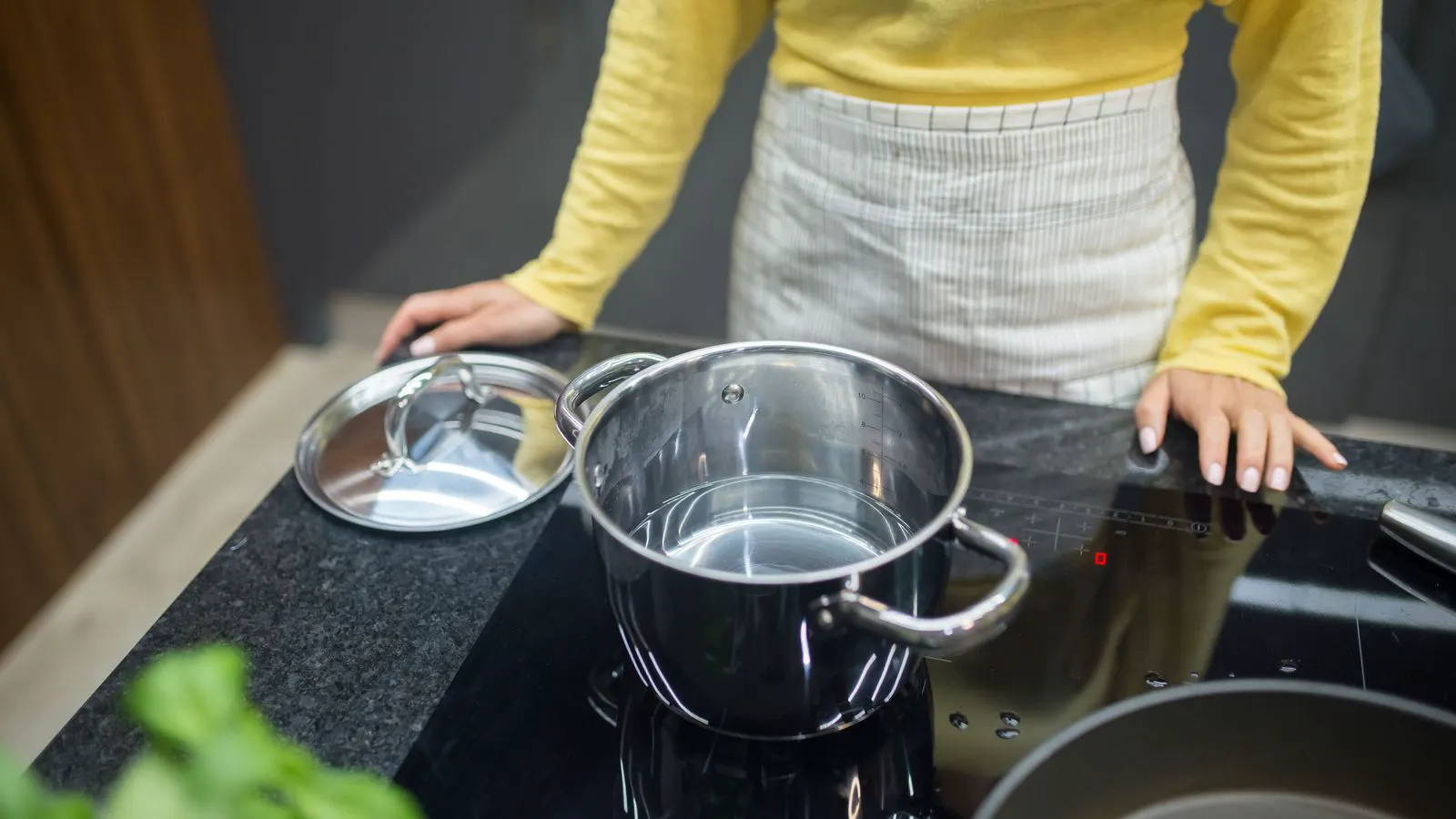
However, the efficiency gain is not automatic. It depends on the cookware. A heavy, flat-bottomed, magnetic pot transfers heat well. A warped or thin pan will not. If the pot does not sit flat against the induction surface, the energy conversion drops. Buyers must specify cookware as part of the equipment package. They cannot buy the cooktop and assume the existing pots will perform well.
The energy profile also changes with load. Induction handles short, high-intensity bursts well. A gas burner wastes energy while heating the flame itself. Induction heats the pot almost instantly. When the chef turns off the heat, the energy stops. The pot continues to conduct heat, but the source is cut. This is a different dynamic than gas, where the flame continues to burn until it is turned off.
Workflow and Operational Shifts
The biggest change for kitchen staff is the workflow. Induction cooktops are flat. There is no raised burner. There is no flame to shield the face from. This changes how a chef positions a pan. The lack of a flame also means there is no visual cue for heat. A gas chef watches the flame size. An induction chef reads a digital display or uses a probe thermometer.
This creates a learning curve. A line cook who has spent ten years over a gas range may struggle with the precision of induction. The temperature range is often broader than a gas flame. The controls are usually digital. They can be set to precise degrees. But the chef must trust the reading. They must also understand how the heat behaves in a specific pot. A heavy cast iron pot holds heat differently than a stainless steel pot. The chef must adjust their technique.
The workflow also changes for the prep station. Induction is often used for quick tasks. Searing, deglazing, and small-batch cooking. It is less common for long, low-heat simmering in some setups, though this is changing. Many modern systems have low-power modes. But the heat retention of the cookware becomes more important. A heavy pot holds heat longer. A thin pot cools faster. The chef must plan their tasks with this in mind.
The Cookware Investment
This is the most overlooked cost. Induction requires ferromagnetic cookware. Most stainless steel pots with a magnetic base work. Many do not. Copper-lined pots often do not. Aluminum pots almost never work. The buyer must audit their existing inventory. They must identify which pots and pans are compatible. They must budget for new cookware.
The quality of the cookware matters. A cheap, thin pan will warp. Warped pans do not sit flat on induction. This causes inefficient heating. It can also damage the cooktop surface over time. Buyers should invest in heavy-gauge stainless steel or cast iron. These materials have a flat, thick base. They conduct heat well. They are also durable. They can withstand the rigors of a high-volume kitchen.
The initial cost of compatible cookware is significant. But it is a one-time investment. The pots and pans will last for years. They will also perform better in other applications. A heavy stainless steel pot is a good asset. It works in ovens, on the stove, and on induction. It is a long-term investment.
Maintenance and Safety
Maintenance is simpler with induction. There is no flame to clog the burner. There is no burner head to clean. There is no gas line to leak. The cooktop is a flat, smooth surface. Food splatter can be wiped away. There is no risk of a gas leak. This is a major safety benefit. The risk of fire is lower. The cooktop surface does not get hot unless a pan is on it. A spill on the surface does not burn the chef.
However, there are new risks. Induction cooktops have a glass surface. This surface can crack if a heavy pot is dropped on it. The cooktop also has sensors that can fail. These sensors require calibration. The system may shut down if it detects a fault. Troubleshooting can be complex. The buyer should factor in service contracts. They should ensure that a local technician can service the equipment.
The safety profile is better, but not perfect. The glass surface can get hot if a pan is on it. The chef must still use a dry cloth. Wet cloths can damage the glass. The induction field is also strong. Metal objects near the cooktop can heat up. A steel spoon left on the edge of the cooktop can get hot. This is a minor risk, but it is real.
Five Shifts Buyers Should Plan For
- Workflow Redesign: The kitchen layout must accommodate the flat surface. Staff must be trained on the new controls. The prep station may need to move closer to the cooktop. The lack of a flame changes the visual workflow.
- Cookware Audit: Every pot and pan must be checked for magnetism. The inventory must be replaced where necessary. The budget must include a significant cookware line item.
- Energy Management: The facility manager must understand the new energy profile. The load curve will change. Peak demand may shift from morning to evening. The ventilation system may need to be adjusted to handle the lower heat load.
- Staff Training: The chefs must learn the new techniques. The line cooks must understand the digital controls. The training must be hands-on. Reading a manual is not enough. The staff must cook on the induction system before service.
- Maintenance Planning: The service contract must cover the glass surface and the electronics. The buyer must ensure that spare parts are available. The maintenance schedule must include cleaning the sensors. The cleaning must be done with the recommended products.
How to Prepare for the Transition
The preparation starts before the purchase. The buyer must define the scope. Is this a new build or a retrofit? A new build allows the kitchen to be designed around induction. A retrofit requires adapting an existing layout. The retrofit is often more difficult. The gas lines must be removed. The ventilation must be resized. The electrical capacity must be increased.
The buyer must also consider the future. Induction technology is improving. New models are smaller, cheaper, and more efficient. The buyer should choose a system that can be upgraded. They should avoid proprietary parts where possible. They should ensure that the cooktop is compatible with standard induction cookware.
The transition is not just about the equipment. It is about the people. The chefs must be willing to learn. The managers must be willing to change their procedures. The facility must be willing to invest in the new infrastructure. If these three are in place, the transition will be smooth. If any of them are missing, the transition will be difficult.
Final Considerations
Induction cooking is a significant shift in commercial kitchen technology. It offers real benefits in energy efficiency, speed, and maintenance. But it also requires a different approach to workflow, cookware, and staff training. The buyer must plan for these changes. They must not underestimate the initial investment. They must not assume that the existing staff will adapt quickly.
The decision to adopt induction is not just a technical one. It is an operational one. It changes how the kitchen runs. It changes how the staff works. It changes how the facility is managed. The buyer must be prepared for this. They must be willing to make the necessary changes. They must be willing to invest in the new tools and training.
The trend is clear. Induction is moving from the fringe to the center. High-volume kitchens are adopting it. The drivers are real. The benefits are real. The preparation is the key. The buyer who plans for the shifts will be ready. The buyer who does not will struggle.
Frequently asked questions
Is induction cooking more energy efficient than gas?
Yes, induction is generally more energy efficient than gas because it transfers heat directly to the cookware. It reduces the energy lost to the surrounding air. The efficiency depends on using compatible cookware.
Can I use my existing pots and pans with induction?
Not all existing pots and pans will work. Induction requires ferromagnetic cookware. Most stainless steel pots with a magnetic base work. Many aluminum and copper pots do not. You must audit your inventory.
How long does the transition take?
The transition time depends on the scope. A small café may take a few weeks. A large institutional kitchen may take several months. The training and workflow changes are the longest part.
Is induction safer than gas?
Yes, induction is generally safer. There is no open flame. The risk of fire is lower. The cooktop surface does not get hot unless a pan is on it. However, the glass surface can crack if abused.
What is the biggest cost of adopting induction?
The biggest cost is the cookware. You must buy new pots and pans that are compatible with induction. The cooktop itself is also expensive. The installation may require electrical upgrades.